Tuesday, December 30, 2025


I haven’t seen many movies this month, so it was a treat to get to The Museum of Modern Art for Eleanor the Great Monday afternoon. It was part of The Contenders 2025 series. I had thoughts, and here are some of them. No big spoilers.

Overheard after the movie: “I could really relate to it. Lying was one thing my family was good at.” Eleanor’s lies are told with the best of intentions, which somewhat justifies them. They’re still lies, though, so she does pay a price. The script by Tony Kamen doesn’t just tug on the heartstrings, it gets them in a vice grip and doesn’t let go. That said, though the happy ending is a bit too pat, it didn’t bother me.

Worth seeing for June Squibb and the rest of the cast. Overall, a well-done first feature by Scarlett Johansson.

No longer in theaters, as far as I can tell, it can be streamed just about everywhere.

AI: Threat or Menace?

 If you’re not gaga over AI, you’re not alone.

Let me rephrase that. If you think AI is the greatest thing since sliced bread, you are pretty much alone. Josh Marshall has the data.

“As this Politico piece from a couple days ago points out, something like 80% of Americans think AI should be robustly regulated and fewer than 20% of Americans think AI will have a positive impact on America over the next 20 years. These are shocking numbers, to put it mildly. AI is running only slightly ahead of child molesters in the public imagination.”

The Grand AI Disconnect

Kalispell and Billings, Montana, of all places


Here’s a story that wasn’t reported anywhere that I saw. You can call me crazy if you want to, but I sense a trend.

Thanks to Amanda’s Mild Takes‘ “*****’s for the Week.”

Candidates backed by blue money prevail in red city elections

"Roofman" — Reviewed on Letterboxd

Don’t let the insouciant title fool you. Roofman isn’t all that funny. Some clever wisecracks, sure, and I did laugh out loud when Jeffrey Manchester (Channing Tatum), the eponymous Roofman, told Leigh Wainscott (Kirsten Dunst) that his name was “John Zorn,” an apparent reference to the avant-garde musician. Aside from that, it’s a high anxiety thriller sometimes, a love story based on deception for most of the last half, and a biopic of a for-a-time successful criminal all the rest of its 126 minute running time.

As Manchester’s Army buddy, Steve (LaKeith Stanfield), says of him, “We both know that doing things the right way is not your superpower.” He or someone else says that Manchester is some kind of genius and really dumb at the same time. That is played out again and again, as Manchester gets away with something thanks to his superb observation and planning skill, only to put himself in jeopardy because what he wants more than anything is a family and the love of a good woman. The ride that director Derek Cianfrance takes the audience on spends a considerable chunk of the movie on Manchester’s winning over Leigh’s daughters, to show, apparently, that he’s a softie at heart.* It also explains the ending, which is well telegraphed yet comes as something of a surprise.

Roofman is well worth seeing for Channing Tatum’s charismatic performance, both clothed and — SPOILER ALERT! — nude. Actually, to correct what I said about there being nothing funny about it, the sequence when store manager Mitch (Peter Dinklage) discovers Manchester standing right in front of him is funny.

Rated R for language, nudity and brief sexuality. Apparently no animals were harmed, though the only animal I saw was a duck that Manchester feeds in the prison yard. As for explosions, no cars were blown up. However, there is a spectacular fireball that’s caused by Manchester’s inexperience as an arsonist.

* A producer and a writer were in a meeting. The producer says, “I love the script, I think it’s great. I’d like you to make the kid more sympathetic.” The writer says, “Sure. what did you have in mind?” The producer says, “Give him a puppy. Give him a limp.” The writer says, “Give the puppy a limp?” The producer says, “How the hell should I know? You’re the writer, you figure it out.” Shorthand: “Give the puppy a limp” for make a character sympathetic, as Cianfrance and co-writer Kirt Gunn do for Manchester.

Monday, December 29, 2025

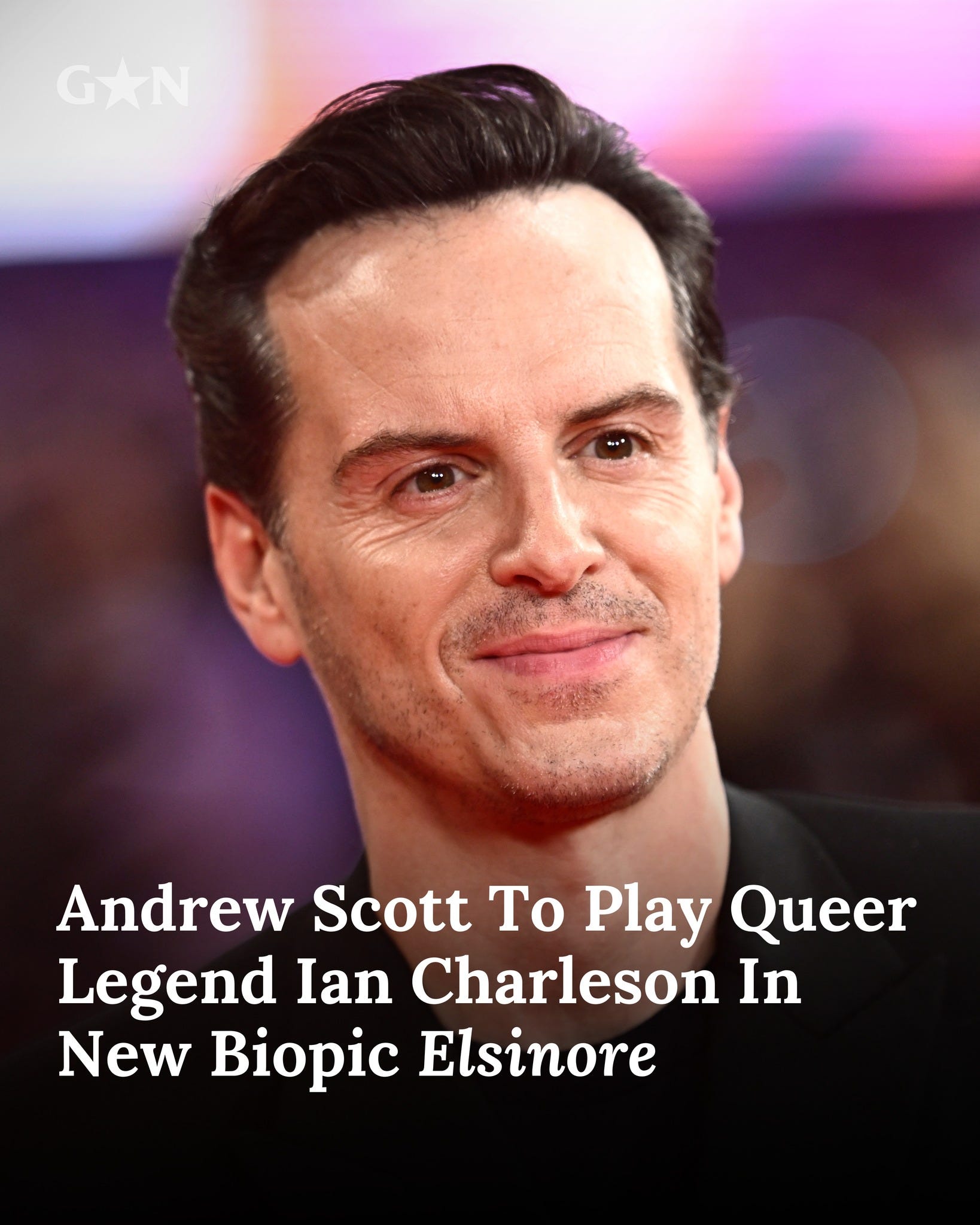
Andrew Scott to star in Ian Charleson biopic


From Gay Star News’ Facebook news feed:

Andrew Scott to play gay icon Ian Charleson

Andrew Scott is preparing to take on what is already being described as a career-defining role, portraying revered Scottish actor Ian Charleson in Elsinore, a newly announced biographical drama from StudioCanal, first reported by Variety.

The film will be directed by Simon Stone, who makes the leap from actor to filmmaker, with a script by BAFTA-winning writer Stephen Beresford, best known for Pride. Together, they focus on the final and most intense period of Charleson’s life, as he prepared for and delivered a legendary turn as Hamlet while living with AIDS.

Scott will also serve as a producer on the project, deepening his creative involvement beyond the screen. His casting has been met with widespread acclaim, with Stone calling the pairing of actor and subject a rare alignment. “Andrew Scott is one of the greatest actors of his generation,” he said, drawing a direct parallel to Charleson’s own standing in British theatre.

While Charleson reached global audiences through Oscar-winning films such as Chariots of Fire and Gandhi, his most enduring impact was forged on stage, where his performances — particularly in Shakespeare — secured his reputation as one of the great actors of his era.

Monday, December 22, 2025

"I like your Epstein Files T-shirt"


I don’t know what all the fuss is about a few little redactions. It’s the most transparent regime—I mean “administration”—in American history, maybe since the Roman Empire

Friday, December 05, 2025

Everything is going according to The Plan!™ update

Gallup has surveyed voters on what they think about the president since Harry Truman was in the White House. TL, DR: It’s looking bad for the Dotard Leader. Here’s an excerpt from Ed Kilgore’s article in New York magazine.

“A quick scan shows that *****’s terrible standing among independents right now places him in some dangerous territory.

“To start with, that 25 percent job-approval number among independents is significantly lower than any ***** registered in Gallup’s monthly surveys during his first term. His job-approval rating among independents was at 39 percent the day he lost his 2020 reelection bid. And it was still at 30 percent in January of 2021, immediately after the January 6 Capitol Riot made him look dead politically for a good while. He’s in uncharted territory right now.

“Let’s compare this terrible standing among the unaligned with the famously unpopular presidents of the past. At this same point in his one term as president, Joe Biden’s job-approval rating among independents was 37 percent. It hit an all-time low of 27 percent among independents in November 2023, before improving back to 37 percent by the end of his term. George W. Bush actually did worse late in his second term when the bottom was falling out of the economy; his October 2008 job approval among independents was at 19 percent, but that wasn’t much worse than his 25 percent approval rating among all voters. Bill Clinton briefly plunged below 30 percent among independents during his rocky first few months as president, but he was up to 44 percent prior to a disastrous 1994 midterm election and eventually 67 percent by the end of his presidency. Richard Nixon didn’t reach *****’s low levels of job approval among independents until he was in the depths of the Watergate scandal; he hit 23 percent when impeachment proceedings against him began and 22 percent the day he was forced to resign.”

Read the article here after you prove you’re not a robot: https://nymag.com/intelligencer/article/*****'s job approval among independents is astoundingly low

Saturday, November 29, 2025

"Thanksgiving on Thin Ice"

Mary Geddry watched the Turkey Pardon ritual so we didn't have to. 

CONTENT WARNING: This is a real downer, and it’s just five paragraphs from the entire article.

“As all of this unravels, the turkey psychodrama, the imaginary borders sealed to perfection, the SWAT-team-for-my-girlfriend subplot, the re-litigation of last year’s poultry, the self-contradictions delivered back-to-back without a blink, it’s impossible to ignore the larger, more chilling truth hovering behind every one of these public appearances. This isn’t just chaos; it’s disorganization. Deep, unspooling, unmistakable disorganization from a man who holds the nuclear codes.

“Every part of that turkey-pardon performance ricocheted like a pinball machine on the fritz: One moment he’s bragging about patio stones, the next he’s invalidating ceremonial pardons, then he’s insisting the border is at ‘zero,’ then he’s ranting about Chicago murders, then he’s praising a prison in El Salvador, then he’s promising $2 gas, then he’s declaring he ended ‘eight wars in nine months,’ then he’s doing stand-up about fat governors. It’s not just off-topic; it’s untethered. The through-line isn’t policy; it’s impulse.

“And that’s the part that should keep everyone up at night. We’re not watching a man who loses the plot. We’re watching a man who no longer seems aware that plots exist. This is someone who jumps between fantasies, vendettas, hallucinated statistics, and self-congratulation with the ease most of us change radio stations. That is frightening enough at a Thanksgiving sideshow. It is catastrophic when the same man can, on a whim or a misunderstanding or a perceived insult, initiate decisions with global consequences measured not in ‘crime statistics’ but in megatons.

“There’s a point where this stops being funny, even in a country that copes with gallows humor as a national pastime. There’s a point where the disjointedness stops being a quirk and becomes a risk. We passed that point a long time ago. What we saw at the turkey pardon wasn’t just a rambling holiday speech; it was a man broadcasting, openly and without disguise, that he is no longer capable of holding a coherent idea for more than thirty seconds.

“The danger is that the most disorganized speaker in American public life remains the one person empowered to make the kind of decisions you need absolute clarity for.”

Thanksgiving on Thin Ice” by Mary Geddry from Geddry’s Newsletter, 11/25/2025


Thursday, November 27, 2025

“Some of My Best Friends Are ... ”

Its Christmas Eve, and the holiday spirit abounds at The Blue Jay

Imagine if someone had a Christmas Eve party and invited all the clichés they knew. If the party was held in a gay bar, you’d have Some of My Best Friends Are.... “Stereotype” would be a better description if one was being kind, and really ...My Best Friends... did the best that could be done at the time. Those people existed and they faced the same challenges the movie’s characters did.

 
Why to watch:
• A picture, albeit slanted, of gay life in the 1970s
• Fannie Flagg as the coat-check attendant
• Rue McClanahan as a nasty piece of work
• Sylvia Syms as the beloved cook
• Gary Sandy (WKRP in Cincinnati) as a hustler
• most notably, Candy Darling, who steals every scene she’s in

 
Why not to watch:
• Some characters get lost in the myriad subplots
• Many cringe-worthy though historically accurate situations
• Wildly varying performances

Tuesday, November 25, 2025

Oklahoma! with an exclamation point

Today’s dive down a rabbit hole was inspired by Rodger and Hammerstein’s Oklahoma!, of all things. Oklahoma! is the backdrop for Richard Linklater’s movie about Lorenz Hart, Blue Moon, which takes place at Sardi’s on the night of the Rodgers and Hammerstein musical’s premiere. This article in Smithsonian Magazine explores the back story of the musical and Lynn Riggs’ play, Green Grow the Lilacs, that it was based on. It turns out that there are significant links between the musical and gay history, as well as a connection to Hollywood in the 1930s.

Behind "Oklahoma!" lies the remarkable story of gay Cherokee playwright Lynn Riggs


Friday, September 12, 2025


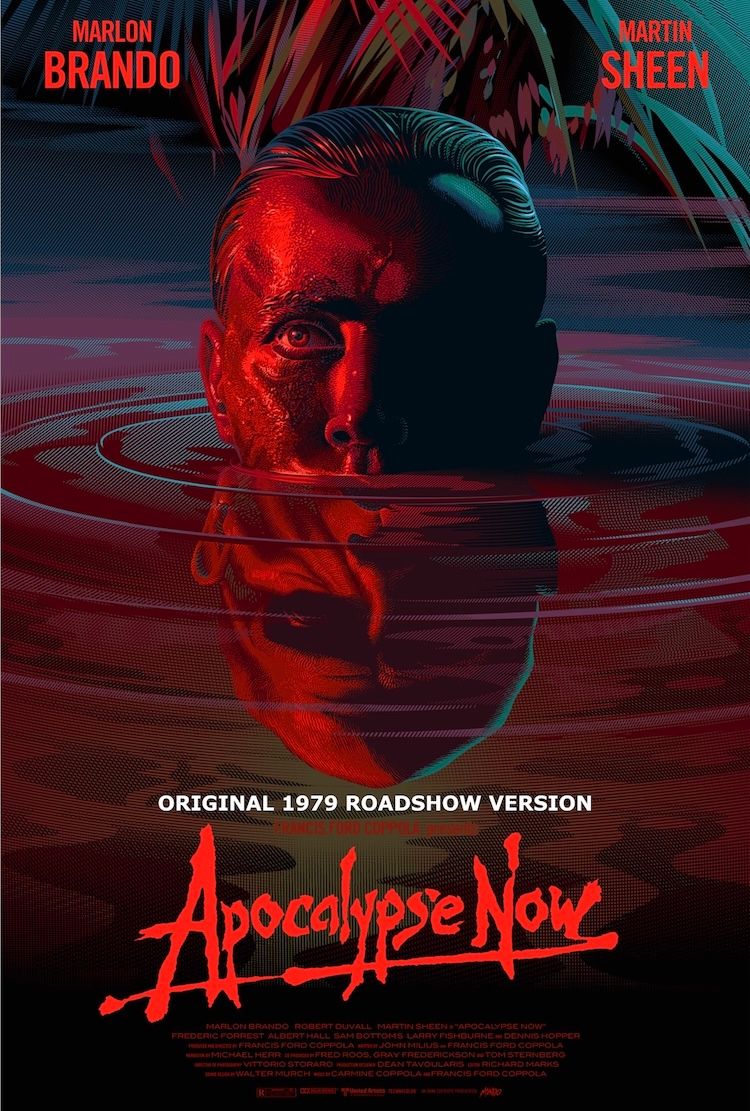
"Portentous," "monumental," "damn near endless" are all descriptions that came to mind after seeing Apocalypse Now (1979; dir. Francis Ford Coppola). The Paris Theater’s "Big and Loud" series presented the restoration of the original roadshow version, which runs just shy of three hours. When the film ended, without credits, it felt like I
d been hit repeatedly about the head and shoulders with a heavy, blunt instrument, and I dont mean that as a compliment. Theres a lot to take in, and it takes time and reflection to make sense of the movie.

After seeing Megadoc, Mike Figgis documentary charting the making of Coppolas most recent feature, Megalopolis, just the other day, I can see parallels between the two movies, despite their being made more than 40 years apart. From the evidence of the two movies, Id say that Coppola is more interested in big themes than simple stories; in an epic scope rather than human scale; and in spotlighting operatic violence, even buckets of blood, whenever possible. He strives to reach 11 on a scale of 10, and succeeds more often than not, leaving the audience gasping in his wake. I believe the Sicilian word is stonnat' or stunned.

To recap the plot, Apocalypse Now takes place during the Vietnam War and is about Captain Willard (Martin Sheen), who is sent up the Nung River to find Colonel Kurtz (Marlon Brando), a renegade Green Beret whos conducting a private war from a base in Cambodia. Along the way, Willard witnesses and participates in a string of horrific war crimes that do nothing to advance the plot, but pretty effectively traumatize the audience much as the war traumatized the soldiers who fought in it. Finally, he finds Kurtzs base and at that point the movie turns into a dramatization of Joseph Conrads Heart of Darkness, which was set in the Belgian Congo at the time of King Leopolds worst atrocities. Not only is Kurtz certifiably insane, but a photographer (Dennis Hopper) is loose on the property and hes floridly psychotic as only Hopper can be. Kurtz takes Willard prisoner, tortures him, then frees him, and (no spoilers) Willard has to decide if hes going to carry out his mission. In the meantime, an ox is ritually slaughtered, serving as an on-the-nose metaphor and yet another spectacular set piece.

Coppola made Apocalypse Now, at considerable personal cost, to put the war on the screen. It was his answer to the question posed in Norman Mailers book Why Are We in Vietnam?, and unlike Mailer, whose answer was that the war was sublimated homosexual dominance on a grand scale, Coppola showed what the war looked like and how it destroyed the people who were sent to fight it. Tens of thousands were killed, the rest were traumatized.

The problem for me after my first viewing was that beyond showing how Captain Willard, who starts out pretty unhinged (he bloodies his fist by punching a mirror in a drunken stupor in the movie's first 10 minutes), ends up nearly catatonic after he leaves Kurtzs compound, it seemed like there wasnt anything else to take away about the characters. With some reflection, I changed my mind.

Willard starts out damaged and ends up wrecked by what hes been through and what hes had to do. The surfer, Lance (Sam Bottoms, Timothy Bottoms brother), is similarly wrecked, though his LSD trips shield him from the worst of the carnage hes witnessed and participated in. And the audience should be touched in a similar way, though some people may remember the visuals more clearly than the message. This isnt surprising, since Coppolas message is widely understood today, more than when the film was released.

For many viewers, the spectacle is enough—the helicopter ballet to Wagners Ride of the Valkyries gave me goosebumps, the explosions were lovely, and Kurtzs compound in a Cambodian ruin was beautiful. That Apocalypse Now is more than this, that Captain Willard becomes an empty shell to cope with his experience inside the heart of darkness, is a testament to John Milius script and Coppolas vision as a director.

Saturday, August 23, 2025

The Wrong Box (1966, directed by Michael Hodges; script by Larry Gelbart and Burt Shevelove, inspired by a story by Robert Louis Stevenson)

Despite its misfires, it has some marvelous performances.

Todays movie in the Museum of Modern Arts Michael Caine retrospective was The Wrong Box. It isnt bad—at best its a shaky ⭐️⭐️⭐️ movie—but given the creative team it should have been better.

While The Wrong Box isnt quite as funny a farce as it thinks it is, there are some truly comic scenes that stand out from the stodgy bits: Ralph Richardson (Joseph Finsbury) dodging the missiles hurled by John Mills (his brother, Masterman Finsbury) as he tries to mortally wound him, thereby collecting the money in the tontine that was set up when they were boys; Peter Sellers as Dr. Pratt, surrounded by kittens and cats in his dire flat, with so many good lines that you’d have to take notes to remember them all; and the last scene when everybodys chasing everybody, the coffin ends up in the wrong carriage, and clergyman Norman Bird, whos trying desperately to conduct a funeral, is so flustered that he starts to read the marriage service. Theres also a dead body that has to be dealt with, the oldest butler in London (Peacock, played by Wilfrid Lawson) who always seems on the verge of expiring, and a Salvation Army delegation that rescued Masterman after he was dumped in the Thames and brought him home when everyone thought him dead. Overall, though, it doesnt entirely rise to the level of a classic farce. Its more of a British fruit tart than the dessert soufflé it should be.
As for the other stars, Michael Caine plays Mastermans son, Michael, as a dim bulb, which is tiresome; Peter Cook (Morris Finsbury) and Dudley Moore (John Finsbury) are his conniving cousins, doing a double act in which Cook is the smarter one and Moore is always being distracted by whichever lady is in the vicinity; and Nanette Newman (Julia Finsbury) is a beautiful but not very bright ingenue who screams at the least provocation.
If the writer of the Museum of Modern Arts note saw the movie they wouldnt have described Michael Caine’s role as “brief but memorable.” He has as much screen time as any of the other stars.
The Wrong Box will be screened at the Museum on Sunday, August 31 at 2 p.m. It was available from Sony in the U.S. and Indicator in the U.K., and though it seems to be out of print, it can be found on eBay. There are no streaming options.

Deal With It


I'm not napping, jerk.

Thursday, July 03, 2025

Our Betters (George Cukor, 1933): When irony was in flower


Our Betters, based on a play by Somerset Maugham, is set in post-WWI London. That the title is meant ironically is made evident in the first 10 minutes when newlywed Pearl Saunders (Joan Bennett), an American hardware heiress, inadvertently discovers her husband of but a few hours, Lord George Grayston (Alan Mowbray), consoling his mistress and assuring her that everything between them will continue just as before. (Did you ever hear of such a thing? I didn’t think so.)

Her innocence destroyed in record time, Pearl, now Lady Grayston, calls on her native moxie and makes the best of the bad situation. Soon, she is London’s hostess with the mostest, with newspaper articles to prove it. Her dinners and parties are the talk of the town and an invitation to a weekend at the Grayston estate is much sought after.

Five years pass, as Pearl does her best to smile through her tears. Enter sister Bessie (Anita Louise) and Bessie’s American beau Fleming (Alan Starrett), well-meaning naïfs who are thrust into a decadent milieu unlike anything they saw back home. The tensions between Joan’s glittering life and her aching heart become painfully evident, and over the course of a weekend in the country, everyone’s life changes forever, as movie loglines love to say. Actually, everybody gets shaken up for a while and by lunchtime the next day it’s clear that things will go on much as before.

Maugham must have been inspired by Oscar Wilde’s The Importance of Being Earnest to write a play with an upper-class setting in which wealthy characters spout witty, epigrammatic dialogue. In an obvious homage to Wilde, the last character to appear is named Ernest, and he is astonishingly effeminate even for the height of the Pansy Craze. He seems to be wearing lipstick and eye shadow, and is a tango instructor. Played by Tyrell Davis, he gets the last line and puts his gay seal on the proceedings.

The nonstop wit gets a bit tiresome, and if the film of Our Betters doesn’t overcome its stage origins, the pre-Code frankness of the script is worthy of at least one star.

Fun Fact: George Cukor directed Our Betters, Dinner at Eight, and Little Women in 1933. That was some run of Hollywood Golden Age classics.

Tuesday, June 03, 2025

’In Dreams’ by Sierra Ferrell

This will clear the politics out of your head for a few minutes. There’s a link to this video in the New York Times article “In the Age of the Algorithm, Roots Music Is Rising,” which is one of the most overwritten pieces I’ve read in a long time. As mentioned in the article, “In Dreams” has racked up more than 11 million views.

Sierra Ferrell’s voice reminds me of 1920s recordings, though the lyrics are like nothing the Carter Family ever dreamed of.

Sierra Ferrell, “In Dreams” / Gems on VHS™ 

Monday, February 17, 2025

The Gulf of Mexico/Golphe de Mexique

From J.F. Letenneur: Exceptional onboard document of this rare and fabulous maritime atlas, a masterpiece by the greatest French hydrographer of the 18th century, with maps of all the coastlines known at the time.


Source: The David Rumsey Map Collection

Saturday, February 08, 2025

 It’s Love I’m After (1937)


It’s Love I’m After sounds like it would be more interesting than it turns out to be. There's nothing wrong with the leads or the supporting actors—Eric Blore is almost the fourth lead—but it never achieves takeoff velocity. Whether because of the studio—Warner Bros. instead of Paramount, the director—Archie Mayo instead of Ernest Lubitsch, the year it was made—1937 instead of 1933, or the high society setting, it is a curiosity and not a classic.
     Basil Underwood (Leslie Howard) and Janet Arden (Bette Davis) are two stars of the The-a-tuh who are (we’re told) madly in love but can’t stand each other for longer than it takes to play a scene before the claws come out and they commence to fight like two cats in a sack. Marcia West (Olivia de Havilland) is a besotted fan of Underwood, engaged to Henry Grant Jr. (Patric Knowles), and Digges, no first name (Eric Blore), is Underwood’s dresser and Man Friday. To show Marcia that Underwood is unworthy of her infatuation, Grant inveigles him to turn up at the West family estate and play the cad. He agrees, despite having promised Arden that they will be married that very night. Naturally, nothing goes according to plan. 
     At the West estate, keyholes are peeped through, doors are slammed, signals get crossed, and people turn up when they are least expected by the characters if not the audience. It’s funny enough but it isn’t My Man Godfrey. Still, with Howard, Davis, Blore, and the impossibly young Olivia de Havilland doing their best, 90 minutes pass pleasantly enough. Also in the cast are Spring Byington as de Havilland’s aunt, George Barbier as her father, and Bonita Granville as an annoying girl who might be believable as a nine-year-old but looks like the 14-year old she was.
     You can watch It’s Love I’m After on a Warner Archive Collection DVD. TCM screens it from time to time and there are less legitimate sources for those who care to look for them.


Friday, January 31, 2025

As I was saying...


As Facebook becomes less inviting and Meta more obsequious, it’s a good time to start posting again.

To begin, here’s a short piece on The Brutalist. 

Wednesday’s movie at the Regal UA Kaufman 14-Plex was The Brutalist (2024, dir. Brady Corbet) starring Adrien Brody as László Tóth, a Hungarian architect who has reached the United States after World War II. He left his wife, Erzsébet (Felicity Jones), and niece Zsófia (Raffey Cassidy) behind, thinking they had died at the hands of the Nazis.
Interlocutor: And how did you find The Brutalist, Addison?
Addison: It was brutal, and yes, I'll be here all week.
I stuck with the movie past the halfway mark/intermission, right up to the scene where it jumped the shark. No spoilers, but the action was so implausible and out of character that I walked out. After a few minutes and a chance to reconsider I went back, only to find that there was a new implausible scene, with Tóth berating Gordon (Isaach De Bankolé), his oldest friend in America, someone who’d stuck with him through good times and bad, for no good reason. There was about 15 minutes left, but I’d had enough. You can let me know what I missed in the comments.
There are some good things in The Brutalist, though I can’t remember what they were, but they were outweighed by the problems: slow, almost languorous, pace; multiple implausibilities and plot holes; headache-inducing editing, and peculiar music choices. One that bothered me was a scene in a Black nightclub where the musicians are playing something like free jazz, which as far as I know wasn’t widely heard until the late 1950s (https://en.wikipedia.org/wiki/Free_jazz).
If I had to offer an opinion on why Adrien Brody received a Golden Globe and is nominated for an Oscar [ETA: which he won], Id guess its because he maintains a Hungarian accent for more than three hours, he has a scene where he loses his temper and throws things, because Tóth has a heroin habit, and its a Serious Movie about a creative person whos misunderstood. The heroin is particularly confusing because it doesnt affect his work or his appearance, it shows up and then disappears, and he keeps it a secret from everyone except Gordon for decades.
As always, your experience will vary and Ill be interested to hear what you thought.

A friend wrote: Sorry, Addison, I liked it, though I don’t think it’s one of the greatest. I agree the scene you mention came out of left field but frankly events like that often do. Power dynamics and jealousy were apparent early on. I also liked the occasional noirish elements, e.g., the sudden frantic search for someone and the resulting ambiguity of outcome. I think if you take the Italian scene and look at how losing trust creates unexpected behaviors, it makes sense. As does the decision to confront by one brave actor and the resulting emotions and aggression. Finally with respect to Brody’s performance, it was sublime! The scene at the train when he receives family news: there’s a photograph at Dachau of prisoners welcoming their liberators with exactly that conflicting mix of over-the-top joy/anxiety/grief/despair. Brody totally pulled me into his story then. And what a tender gentle lovemaking was displayed at one point! 

 reacti